Golf Ball Compression Explained: Numbers, Swing Speed and Feel
Golf ball compression describes how much a ball deforms at impact; numbers run from about 30 to 120, with under 70 low, 70-90 mid and 90+ high, but there is no standard gauge.

What Is Golf Ball Compression?
Golf ball compression describes how much a golf ball deforms under load or at the moment of impact; a lower number means the ball squashes more and usually feels softer. The numbers commonly quoted run from about 30 to 120, according to Golfsidekick and Snell Golf, where roughly 30-70 is low, 70-90 mid compression, and 90 and above high compression.
The mechanism is simple deformation. When a clubface strikes the golf ball, it flattens against the face and then springs back.
Low compression golf balls give way more easily, so they feel muted and can be easier to launch. A firmer, high compression build resists that deformation.
That resistance is why high compression golf balls feel firmer at impact and can hold ball speed better when the swing is fast enough to load them fully.
Ball compression is often marketed as if a lower number means longer or higher-spinning, so plenty of golfers pick the wrong ball for the wrong reason.
This guide is for golfers choosing a ball. It explains what the compression number measures, why brands and labs report different figures, and how to use a golf ball compression chart without overrating it - so you pay for feel and spin you will actually notice.
How does compression create feel?
How does compression translate to feel? With a soft core, the ball compresses more against the face, and the more muted the strike registers in the hands.
A high compression golf ball resists that squeeze, so impact reads as firmer and clickier. Soft feel versus firm feel is the single trait compression controls most reliably.
Feel versus distance
Distance depends on ball speed, launch, spin and strike quality together, so two balls with different compression ratings can carry almost the same for many players.
For a lot of recreational golfers, modern multilayer designs have narrowed the gap enough that compression becomes largely a feel choice rather than a distance lever.
How Compression Is Measured (and Why Numbers Differ)
Measured compression comes from loading a golf ball and reading how far it deflects, but there is no industry-standard compression gauge, so different methods produce different numbers for the same ball. Snell Golf notes the figure depends on the test method, which is why a manufacturer's published number and an independent lab number are not directly comparable.
This is the detail most compression guides skip. A golf ball compression chart looks authoritative when it lists a single number per model, but that number only means something relative to the tool that produced it.
When you compare a maker's marketing figure to a lab figure, you are often comparing two different rulers.
Treat any single compression rating as a rough position on a scale, not a precise physical constant.
The Supersoft example
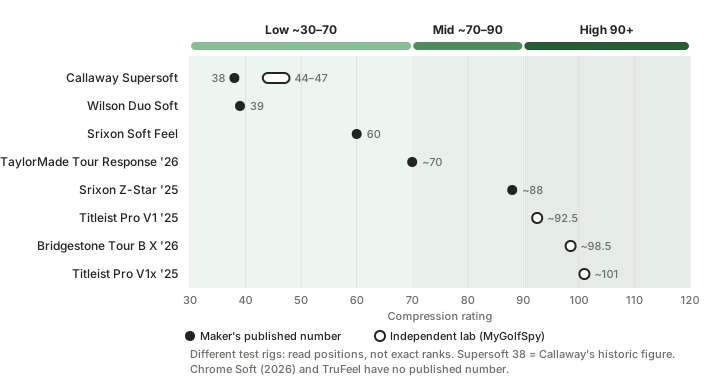
A clear example: Callaway historically marketed the Callaway Supersoft at 38, while MyGolfSpy Ball Lab measured it at roughly 44-47 on its own rig.
Neither figure is wrong. They come from different compression measurements, so treat both as approximate.
Why a Titleist Golf Ball Has No Compression Number
Titleist publishes no compression rating for any of its balls and fits balls on performance instead.
Golf Ball Compression Chart by Swing Speed
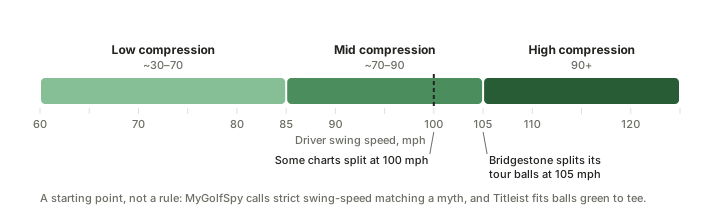
A golf ball compression chart by swing speed is a useful starting point, but it is not an official standard - it comes from retailer and fitting charts, and MyGolfSpy calls strict compression-to-swing-speed matching a myth. The common bands map driver swing speed under about 85 mph to low compression golf balls, 85-105 mph to mid compression, and 105 mph and above to high compression golf balls.
The logic behind the compression chart is real even if the boundaries are soft. Faster swing speeds deliver more energy, so they can fully load firmer balls and get the full spring-back.
Slower swings may not compress a very firm ball as completely, which is where softer balls can feel better and launch more easily.
Every impact compresses a golf ball to some degree, though - swing speed changes how much, not whether. Even on a slow swing the golf ball deforms and rebounds; at high swing speeds a firmer ball simply resists that squeeze more.
Charts do not even agree on the boundaries: some put the split at 100 mph instead of 105, with mid compression at roughly 65-90 for 85-100 mph and high compression at roughly 90-115 above 100 mph. That disagreement is itself a reminder that these golf ball compression ratings are guidance, not rules.
| Driver swing speed | Compression band | Approx compression |
|---|---|---|
| Under ~85 mph | Low | ~30-70 |
| ~85-105 mph | Mid | ~70-90 |
| 105+ mph | High | 90+ |
Driver Swing Speed Under 85 mph
If your driver swing speed is under about 85 mph, low compression balls are a reasonable place to begin because they deform readily and tend to launch easily with a soft feel, according to common retailer fitting charts. That is a starting point, not a rule.
For slower swings, that softer impact is the main benefit: the ball feels less harsh and gets airborne more easily.
The reason softer balls get recommended for slower swings is comfort and consistency of feel, not a promise of more distance.
Which balls sit in this band?
Low compression balls in this bracket include two-piece ionomer designs like the Callaway Supersoft (lab ~44-47), the Srixon Soft Feel (maker's number 60) and the Wilson Duo Soft (Wilson lists 39; Golf Monthly lists 37).
Those figures come from different measuring methods, so read them as positions rather than exact ranks.
The cover trade-off for slower swingers
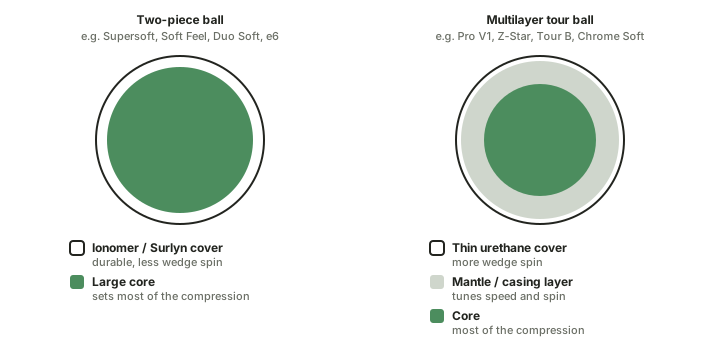
The trade-off with many low compression balls is the cover. Several soft two-piece models use ionomer/Surlyn covers, which are durable but usually generate less wedge spin than urethane covers.
If short-game control matters to you, that cover material can matter more than the compression rating for slower swingers.
Driver Swing Speed 85-105 mph and Over 105 mph
In the 85-105 mph range, mid compression balls are the common starting suggestion, and above 105 mph the charts point toward high compression golf balls for faster swing speeds, according to retailer fitting charts - but the split is player-specific, not universal. Bridgestone itself draws its own line at 105 mph.

Mid compression balls are aimed at average swing speeds and try to blend a soft feel with control, which is why many everyday urethane balls sit in this band.
The Tour B X is labelled higher compression for swings over 105 mph, while the Tour B RX is the low compression option for under 105 mph, per Bridgestone's shop pages.
The mechanism for faster swings is energy transfer. A firmer core can resist deformation and rebound efficiently when the impact is powerful enough, which is why high compression tour balls tend to hold ball speed on faster swings.
Pro V1, Pro V1x and Tour B X: Measured Compression
On the lab side, the measured compression from MyGolfSpy Ball Lab puts the Titleist Pro V1 2025 at about 92.5, the Pro V1x 2025 at about 101 and the Tour B X 2026 at about 98.5.
These are firmer golf balls, but by no means the top of the 30-120 scale - few production tour balls actually approach 120.
Should You Match Compression to Swing Speed?
The golf ball compression chart is only a starting point because compression-to-swing-speed matching is not an official standard, and MyGolfSpy explicitly calls strict matching a myth. Two golfers with identical driver swing speed can want very different balls depending on how they deliver the club.
And since ratings come from non-comparable methods, any chart of compression golf balls that assigns one number per model smooths over real inconsistency.
Because modern golf balls have narrowed the distance gap, chasing the correct compression bracket for your swing speed often changes feel far more than it changes score.
Use the chart to narrow a shortlist of low compression balls or firmer balls, then let feel and short-game performance decide. That is exactly the order Titleist's green-to-tee advice implies - the driver number is the last thing to lock in, not the first.
Golf Ball Compression Ratings by Model
The table below shows why you cannot read one column in isolation: maker's numbers and lab numbers use different rigs, and some models have no published compression rating at all.
Construction and layer count matter as much as the number. Titleist positions the Pro V1 for a mid ball flight and the Pro V1x for a higher one. Pro V1, Pro V1x, Srixon Z Star, TaylorMade Tour Response, Callaway Chrome Soft and Bridgestone's Tour B balls use urethane covers.
By contrast, Supersoft, Soft Feel, Duo Soft and e6 are two-piece ionomer/Surlyn balls. Cover material, not compression, is the bigger driver of spin around the green, even at high swing speeds.
So read these golf ball compression ratings - low, mid compression or high - as a rough map of feel, not a distance ranking. Golf ball compression ratings from the maker and from a lab can differ by several points for the same model.
| Model | Maker's number | Lab number | Pieces / cover |
|---|---|---|---|
| Titleist Pro V1 2025 | Not published | ~92.5 (MyGolfSpy) | Multilayer / urethane |
| Titleist Pro V1x 2025 | Not published | ~101 (MyGolfSpy) | Multilayer / urethane |
| Bridgestone Tour B X 2026 | Higher compression (for 105+ mph) | ~98.5 (MyGolfSpy) | Multilayer / urethane |
| Bridgestone Tour B RX | Low compression (under 105 mph) | - | Multilayer / urethane |
| TaylorMade Tour Response 2026 | ~70 (Nat. Club Golfer) | - | Multilayer / urethane |
| Srixon Z-Star 2025 | ~88 (Srixon spec, via MyGolfSpy) | - | Three-piece / urethane |
| Srixon Soft Feel | 60 | - | Two-piece / ionomer |
| Wilson Duo Soft | 39 (Golf Monthly: 37) | - | Two-piece / ionomer |
| Callaway Supersoft (often searched as Callaway Super Soft) | Historically 38 | ~44-47 (MyGolfSpy) | Two-piece / ionomer |
| Callaway Chrome Soft 2026 | Not published | - | Multilayer / urethane |
| Titleist TruFeel | Not published (softest Titleist) | - | Two-piece / ionomer-type |
Low Compression Golf Balls vs High Compression Balls
Low compression golf balls deform more easily and can launch more easily; high compression balls feel firmer and tend to hold ball speed better on faster swings. That is the honest core of the comparison - not a promise that one is longer for everyone.
The table separates what compression actually controls (feel, and how the ball loads at impact) from what it is often blamed or credited for.
How balls perform on spin and distance depends more on cover and strike than on the compression rating alone.
| Trait | Low compression balls | High compression golf balls |
|---|---|---|
| Feel | Softer, more muted | Firmer, more clicky |
| Best-fit swing speed (start point) | Slower swings | Faster swings |
| Launch tendency | Often easier to launch | Depends on core and strike |
| Energy transfer / ball speed | Fine at slower speeds | Better held at high swing speeds |
| What drives short-game spin | Cover, not compression | Cover, not compression |
| Typical range | ~30-70 | ~90+ |
When High Compression Balls Make Sense
High compression balls make sense when faster swings can load the core fully and the player wants ball speed held on the hardest strikes.
For faster swing speeds, harder balls can feel more responsive without giving away control if the cover is urethane. A too soft ball at very high speed may feel mushy to a fast swinger.
How Compression Affects Ball Speed, Driver Spin and Greenside Spin
Compression affects ball speed most clearly at the extremes of swing speed, but it is not the main lever for driver spin or greenside spin - cover and construction usually matter more. A firmer golf ball can retain ball speed at faster swing speeds; softer balls can feel and launch better on slower swings.
For driver spin, launch conditions, loft and strike location dominate; the compression figure alone does not set your driver spin.
For greenside spin, the cover is decisive - urethane covers usually spin more on wedges than ionomer covers regardless of compression.
As a general tendency, MyGolfSpy notes that low compression balls spin a little less and high compression balls a little more on full shots - but compression is not the main factor in greenside control.
Around the green, ball makers such as Snell Golf point to the gap between a soft cover and the firmer layers underneath as the source of greenside spin.
That is why a soft-feeling ionomer ball like the Supersoft and a soft urethane cover ball like the Callaway Chrome Soft can behave completely differently around the green, even when both feel soft.
Read balls by construction
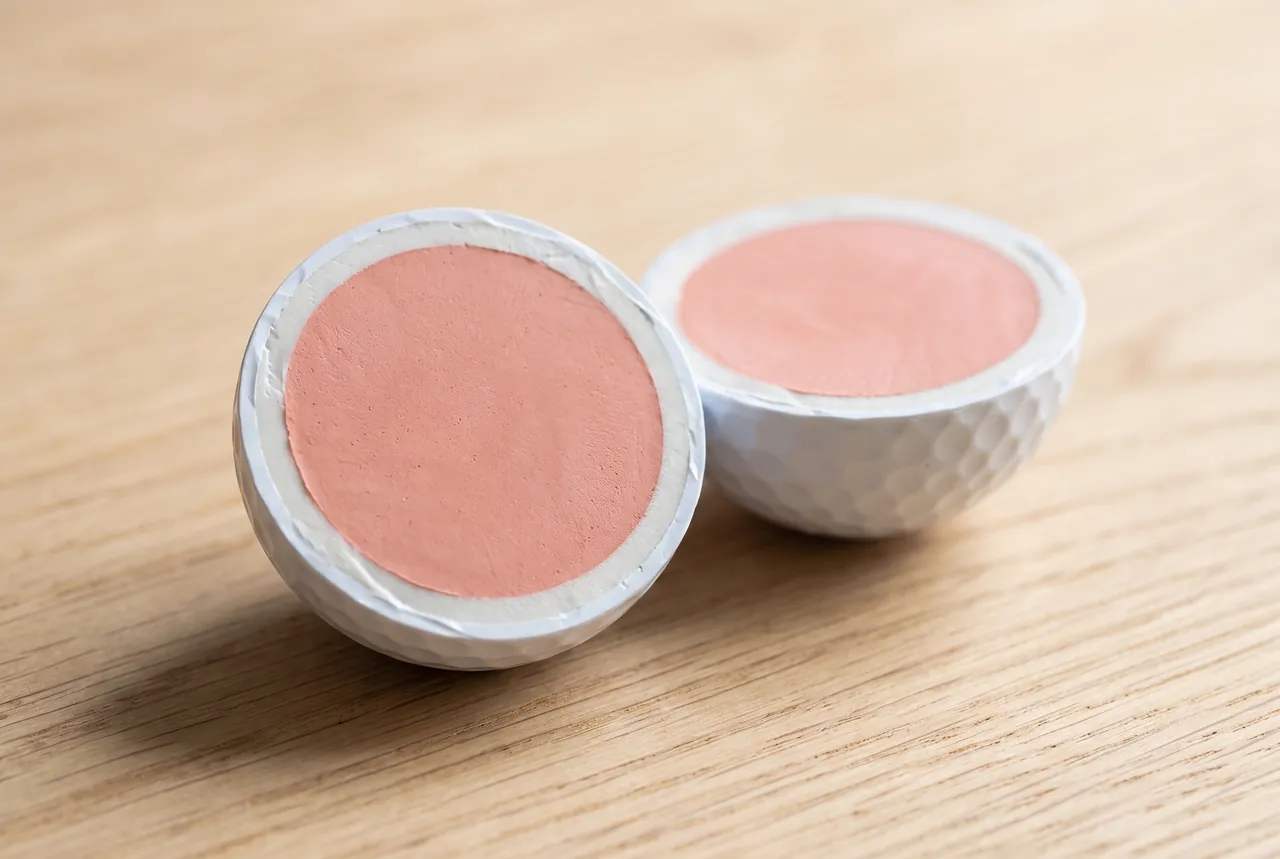
The takeaway is to read compression golf balls by construction. The core sets most of the compression of the entire ball, while the cover drives greenside spin and durability.
If you want more bite on wedges, look for a urethane cover before you look at the compression rating. That is where iron and wedge spin really comes from.
Three Compression Myths
A few compression beliefs get repeated so often they read as fact. Here are three worth debunking directly before you shop.
Myth: softer balls always go farther
Softer does not automatically mean farther. Distance depends on ball speed, launch, spin and strike quality together, so a lower compression rating is no guarantee of more distance.
Even for slower swing speeds, a softer ball is a feel choice first; treat any yardage claim without a published test behind it with caution.
Myth: there's one universal compression scale
There is no single industry compression scale - the number depends on the test method.
That is why Supersoft can read 38 in marketing and roughly 44-47 in a lab.
Myth: soft equals more spin
Soft does not automatically mean more spin. Balls with urethane covers usually spin more on wedges than ionomer balls regardless of compression.
So a firm urethane golf ball, with its thin, soft layer of cover, can out-spin a soft ionomer one around the green - the cover is talking, not the compression.
Golf Ball Compression in Cold Weather
Cold weather makes any golf ball play firmer and lose distance slightly, and the effect is mostly about temperature, not compression rating. Titleist research shared via SwingU (2016) puts distance loss at about 1.5% per 20°F drop from air temperature alone, and cold balls also lose some speed off the face.

Because a chilled ball feels harder, some golfers, especially those with slower swing speeds, switch to low compression balls in winter for a more pleasant strike sensation.
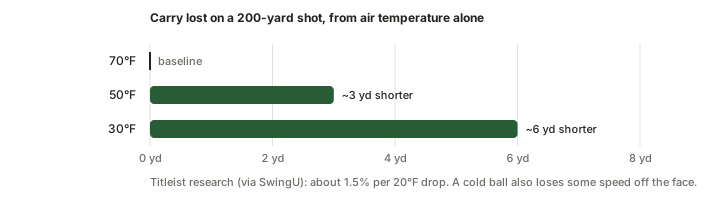
Softer balls in winter are a reasonable feel preference, but it is not a proven distance fix - all golf balls lose distance in the cold, low and high compression golf balls alike.
Storing your golf balls indoors before the round, rather than in a cold car trunk, is a simple habit; the Rules of Golf do not allow warming balls with a device during a round.
Should Slower Swing Speeds Use Low Compression Balls?
Slower swings can start with low compression balls because softer balls tend to launch easily, but it is a feel choice, not a guaranteed distance gain. Retailer charts point slower swing speeds toward the 30-70 band as a starting point only.
The reason to match compression loosely here is comfort of impact, not a promised yardage number for slower swings.
If short-game control matters, a slower swinger may still prefer a tour ball with a soft urethane cover to a two-piece ionomer ball, because the cover, not the compression, drives greenside bite.
How to Choose Your Compression in 5 Steps
Choose your ball the way Titleist recommends - green to tee - so short-game performance and feel lead, and driver behaviour comes last. The best ball for you is the one that performs from the green back to the tee; compression should inform the final shortlist, not start it.
Step 1 - Start on and around the green
Test putting feel and wedge spin first. This is where most golfers, including those with slower swings, actually notice how a compression ball behaves.
Step 2 - Decide the cover
Choose a urethane tour ball (for example Chrome Soft, Tour Response, Srixon Z-Star or Pro V1) for more wedge spin and short game control, or ionomer for durability and lower cost.
Step 3 - Match Swing Speed to a Band, Loosely
Use the golf ball compression chart only to narrow the field by your driver swing speed band - for example, low compression golf balls for slower swing speeds and high compression balls for faster ones - not to pick a single winner.
Step 4 - Compare finalists on feel
Compare finalists - say two low compression balls against two mid compression balls - on feel, not on a single compression rating, on the course or on a launch monitor if you have access to one.
Step 5 - Confirm it conforms
Confirm the ball is on the USGA Conforming Golf Ball List at usga.org, which is updated monthly, if you play competitively.
Frequently Asked Questions
What compression should my golf ball be?
There is no single correct compression: there is no industry-standard gauge, and MyGolfSpy calls strict compression-to-swing-speed matching a myth. As a starting point, retailer charts suggest low compression (~30-70) under about 85 mph of driver swing speed, mid (~70-90) for 85-105 mph and high (90+) for faster swings above 105 mph. Then let short-game feel decide.
Should seniors use low compression golf balls?
Many senior golfers with slower swings prefer low compression golf balls because softer balls can feel better and launch more easily, according to common fitting charts. But it is a feel and preference choice, not a guaranteed distance gain - distance depends on ball speed, launch, spin and strike, and cover material matters more for greenside spin than the compression rating does.
Are Pro V1 balls 100 compression?
Not exactly. Titleist does not publish compression numbers, but MyGolfSpy Ball Lab measured the 2025 Titleist Pro V1 at about 92.5 and the Pro V1x at about 101 on its own rig. Because there is no standard gauge, treat those as lab figures on one test method rather than an official 100.
Which golf balls have 70 to 80 compression?
The Tour Response 2026 from TaylorMade is listed at about 70 (per National Club Golfer), placing it among mid compression balls, near the low-to-mid boundary. Callaway does not publish a number for the 2026 Chrome Soft, so Chrome Soft can only be placed by its positioning as a soft-feel urethane ball. Exact placement varies by test method, so figures around 70-80 from different sources are not perfectly comparable - use them as a rough guide, not a precise ranking.
Does compression affect putting feel?
Yes - compression is largely about soft feel versus firm feel, so a lower compression golf ball gives a softer sensation off the putter, while higher compression provides firmer, clickier feedback.
Do low compression balls spin less around the green?
Not necessarily. Spin around the green is driven mainly by the cover, not the compression: balls with urethane covers usually spin more on wedges than ionomer balls regardless of compression. A soft ionomer ball may spin less near the green than one with a soft layer of urethane on the outside - that is the cover talking, not the compression rating.
Is a Titleist golf ball always high compression?
No. The Titleist Pro V1 measures around 92.5 in the lab, but Titleist's own TruFeel is marketed as the softest Titleist ball. Titleist publishes no compression figures and fits balls green to tee, so different Titleist models cover a wide compression range.