Women’s golf tops
Sleeve length is usually chosen for the weather. It is worth choosing for the dress code and the sun as well.
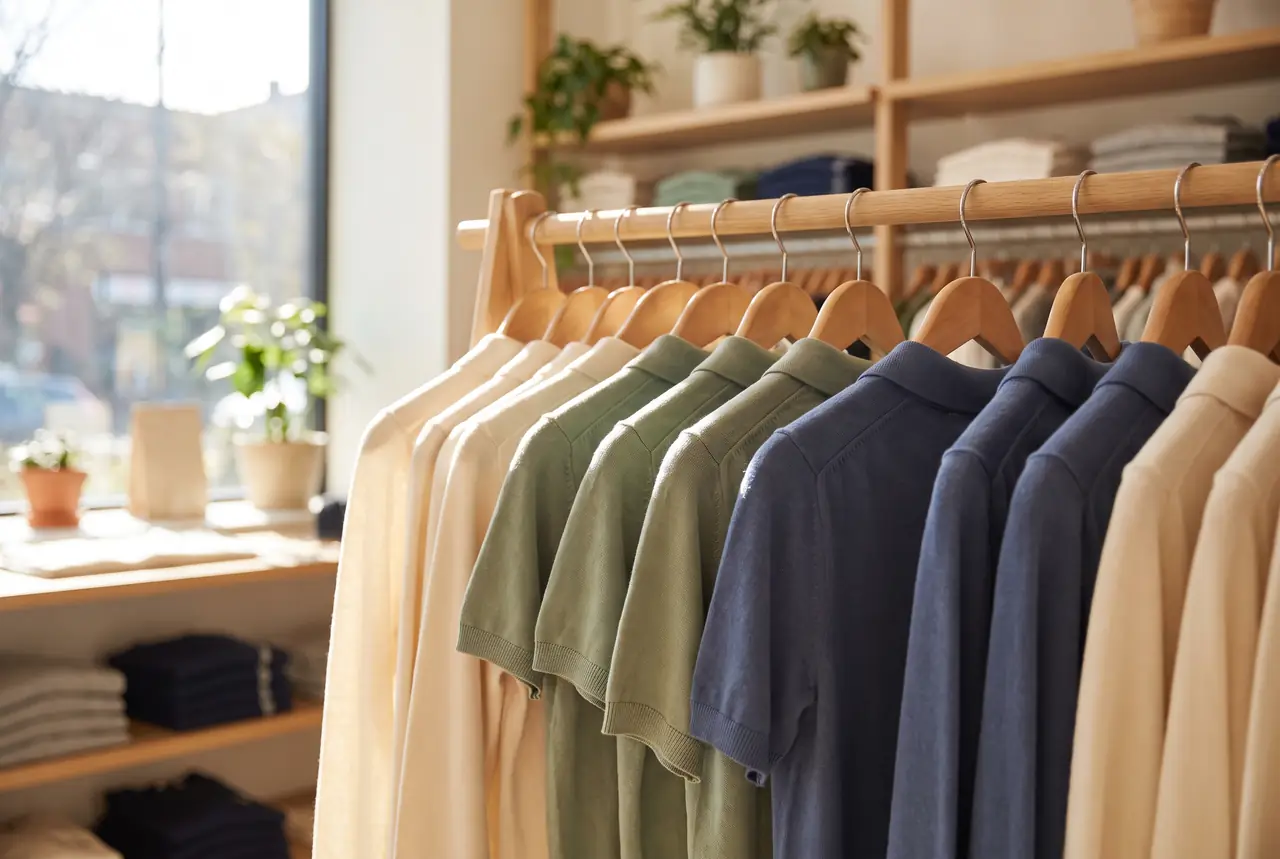
The top is where dress codes bite and where sun exposure is worst, so it repays a little thought beyond what looks good.
Sleeve length, honestly
| Cut | Good for | Watch for |
|---|---|---|
| Sleeveless | Heat; freedom through the shoulder | Some clubs require sleeves; shoulders burn first |
| Cap / short sleeve | The default; satisfies most dress codes | Sleeve seam can bind if cut narrow |
| Elbow length | Sun coverage without heat; flattering through the upper arm | Fewer options; can feel warm in humidity |
| Long sleeve | Cool mornings, sun protection, layering | Cuff must sit clear of the wrist hinge |
Collars and dress codes
The traditional requirement is a collar, and the traditional collar is a polo. Many clubs now accept a collarless top with a defined neckline — a mock neck or a placket without a collar — but "many" is not "all", and the ones that refuse tend to be the ones you travelled to play.
If you own one collared polo in a neutral colour, you will never be turned away.
Sun protection is a fabric property
A rated UPF fabric blocks measurably more ultraviolet than an unrated fabric of similar weight. Coverage still matters more than rating — a long sleeve unrated top protects your forearm better than a sleeveless rated one — but between two similar tops, the rating is a real differentiator.
Colour matters less than people assume. Weave density and fibre do most of the work.
The fit test
Golf tops fail in one of two places: the shoulder, which binds at the top of the backswing, and the hem, which lifts out of the waistband on the follow-through. Both show up in ten seconds:
- Reach across your chest with the opposite hand. The shoulder seam should not drag.
- Raise both arms overhead. The hem should lift less than an inch.
If the top passes both, the rest is taste.