Women’s golf shoes
The one piece of golf equipment where getting the fit wrong ruins the round rather than just the score.
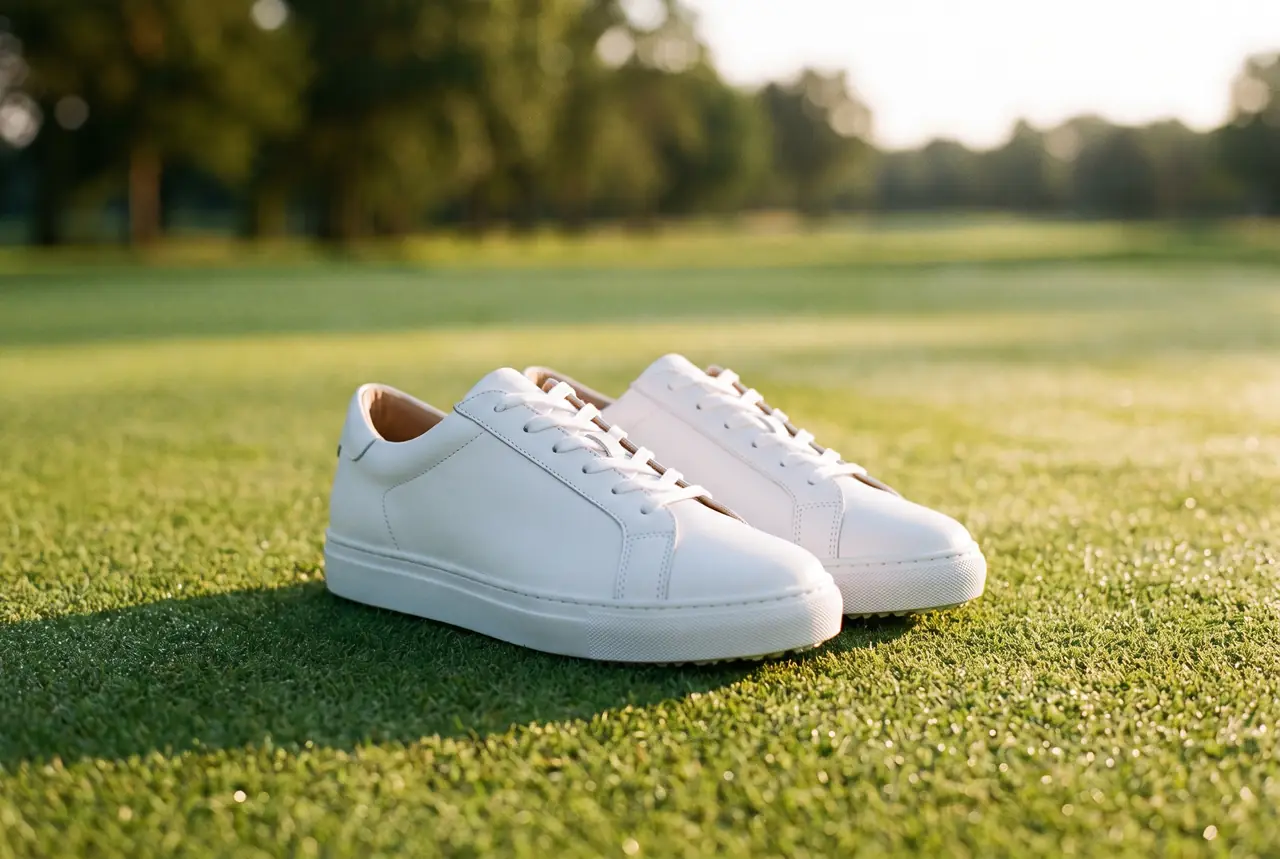
A golf shoe resists forces a walking shoe never sees. Through the downswing your back foot pushes laterally against the ground while your front foot absorbs the transfer. A shoe that lets your foot slide inside it costs you both comfort and contact.
Spiked or spikeless
| Spiked | Spikeless | |
|---|---|---|
| Grip | Better on wet grass, slopes and in early-morning dew | Adequate in dry conditions |
| Comfort walking | Slightly firmer underfoot | Closer to a trainer |
| Off the course | Not really — spikes mark floors | Wearable to and from |
| Upkeep | Spikes wear out and need replacing | Sole wears down and cannot be renewed |
| Best for | Regular play, damp climates, walkers | Dry summers, cart golf, occasional rounds |
If you play once a fortnight in good weather, spikeless is enough. If you walk courses in the morning or play anywhere with real rainfall, replaceable spikes earn their keep.
Sizing is not your street size
Golf lasts run narrower through the midfoot than trainer lasts, because lateral hold matters more than forward roll. Two practical consequences:
- Half a size up is common, particularly in spiked models with a structured upper.
- Your foot swells over eighteen holes. A shoe that fits perfectly in a shop at 10am can feel tight at the fifteenth.
Try shoes late in the day, in the socks you actually play in. Golf socks are thicker than the ones you wore to the shop.
Width is the fix people miss
Most fitting complaints described as "too small" are width problems. If the shoe is long enough but pinches across the ball of the foot, going up a full size gives you a shoe that slides at the heel — a worse problem. Look for a brand offering a wide fitting instead.
Fewer women's golf shoes come in multiple widths than men's. If a brand lists only one, assume it is a medium.
Waterproofing has a shelf life
Most golf shoes carry a waterproof warranty measured in years, and most stop being genuinely waterproof before it expires. The membrane survives; the seams and the flex points are what fail. If you play in wet conditions regularly, treat waterproofing as a consumable rather than a permanent feature.