Golf gloves
A glove is the cheapest item in the bag that measurably affects the shot, and the one most often worn in the wrong size.
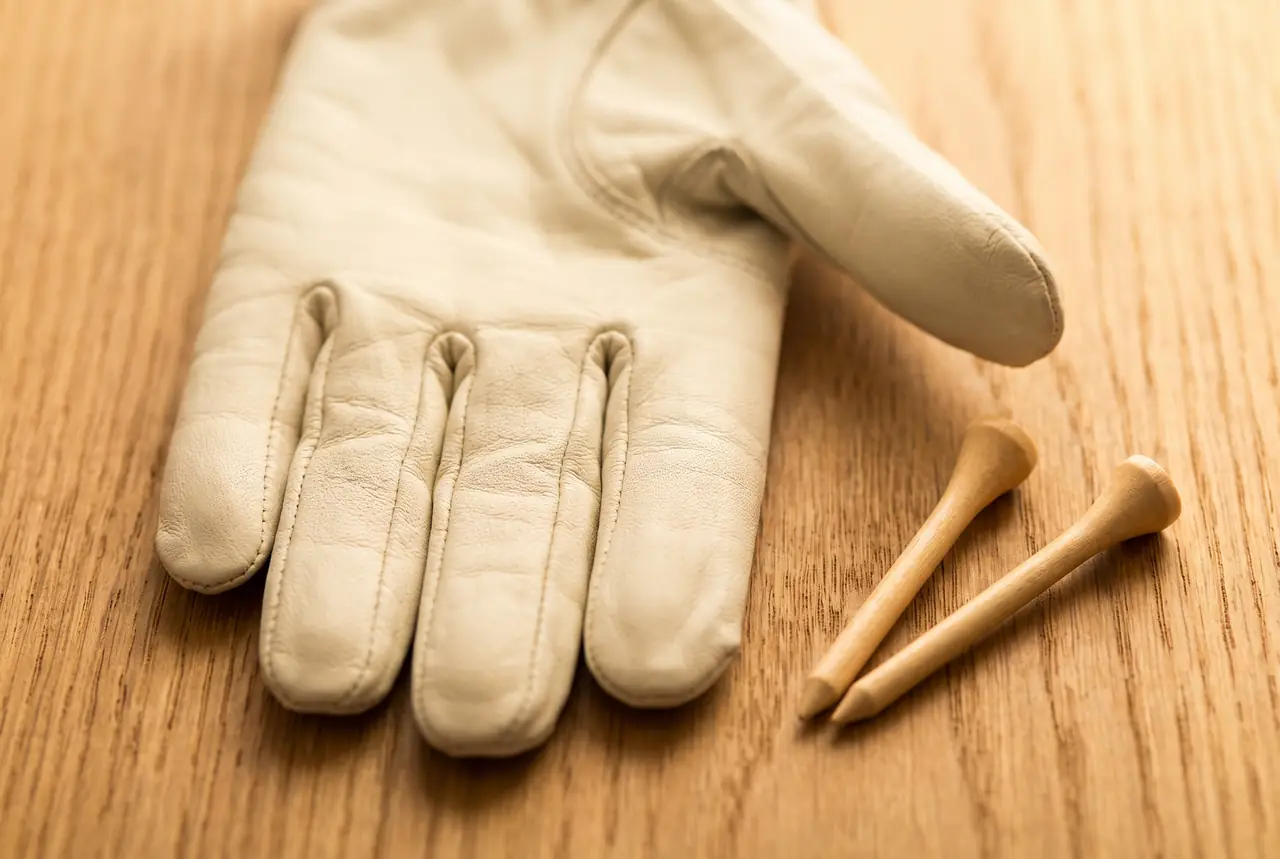
The glove's job is to stop the club turning in your hand. It does that through friction, and friction needs contact — which is why a loose glove is worse than none at all.
How it should fit
Tight. Tighter than feels correct on the first wear.
- No loose material across the palm — that is where slip happens.
- No spare length at the fingertips. A millimetre or two, not more.
- The closure should fasten comfortably in the middle of its range, not at the very end.
Leather stretches with wear. A leather glove that fits perfectly in the shop will be loose within a few rounds, so buy it snug.
Which hand
The lead hand — the one at the top of the grip. For a right-handed player that is the left hand. That hand does the controlling; the trailing hand mostly supports.
Some players wear two, usually for grip in wet weather or for sore hands. It is entirely a matter of preference and no rule prevents it.
Leather or synthetic
| Cabretta leather | Synthetic | |
|---|---|---|
| Feel | Best — thin, close, tactile | Good, slightly less connected |
| Wet weather | Poor — goes slick, then stiff when it dries | Better; some hold grip when damp |
| Durability | Shorter life | Longer |
| Price | Higher | Lower |
Many gloves are hybrids — leather palm, synthetic across the back and knuckles for stretch. That combination is a reasonable default.
Making one last
Most gloves die of being left balled up in a bag pocket. Take it off between shots if it is hot, let it dry flat, and keep two in rotation rather than wearing one until it fails. Two gloves alternated outlast three worn consecutively.
Do not dry a wet leather glove near heat. It stiffens and does not recover.